



便携多通道表面等离子体共振SPR分析仪P4SPR的应用
生物分析领域
定量测量生物体液中的药物或生物标志物,主要是血液、血浆、血清、尿液或组织。
Breast Cancer Biomarker

Approximately one in five women diagnosed with breast cancer worldwide will have HER2-positive brest cancer, a particularly aggressive form of the disease. Although four diagnostic tests exist, research has shown that some HER2 status test results may be wrong.
A diagnostic test using SPR may help address some of the current issues. The potential biosensing application of a new ultra-low fou领 ionic liquid is demonstrated using the P4SPR for the analysis of HER2 in breast cancer cell lysates.
Elucidating a mechanism of CD36

CD36 is a scavenger receptor important in age-related macular degeneration and other diseases. CD36 transmembrane proteins have diverse roles in lipid uptake, cell adhesion and pathogen sensing. Despite numerous in vitro studies, how they act in native cellular contexts is poorly understood. In an investigation with a Drosophila CD36 homologue, SNMP1, the P4SPR was employed to assess small-molecule interactions with a CD36 sensor chip.
Potential new therapeutic pathway for infectious and autoimmune diseases

Cytokine release syndrome is a form of systemic inflammatory response syndrome that arises as a complication of some diseases or infections, and is also an adverse effect of some monoclonal antibody drugs and other treatments. Severe cases have been called “cytokine storms” and can be fatal.
Understanding the mechanism of inflammation is important. Here, the P4SPR was deployed to investigate the binding of a gene (EBI3) to IL-6, a pro-inflammatory cytokine. This unexpected observation could lead to a new therapeutic biologic for autoimmune diseases.
Development of an allergy testing immunosensor for a leukemia treatment

E. Coli L-asparaginase II (EcAII) is a critical component of chemotherapy for childhood acute lymphoblastic leukemia (ALL). This therapeutic, listed as essential medicine by the WHO since 1995, may be compromised by allergic reactions, overt or silent. The main concern relative to the silent hypersensitivity that occurs in 5-46% of patients is the development of neutralizing antibodies that result in silent inactivation of the treatment.
In order to monitor the efficacy of the treatment with EcAII, a test to detect the anti-EcAII antibodies (neutralizing antibodies) using the P4SPR. SPR bioassays were performed in undiluted serum from children undergoing therapy for ALL.
Monitoring therapeutic drugs for dosage optimization

Methotrexate (MTX) is one of the most widely studied and effective therapeutics agents available to treat many solid tumors, hematologic malignancies, and autoimmune diseases such as rheumatoid arthritis; however, the poor pharmacokinetic and narrow safety margin of the drug limits the therapeutic outcomes of conventional drug delivery systems.
MTX concentrations in a patient’s serum undergoing chemotherapy treatments can be determined by surface plasmon resonance (SPR) sensing using folic acid-functionalized gold nanoparticles (FA-AuNP) in competition with MTX for the bioreceptor, human dihydrofolate reductase (hDHFR) immobilized on the SPR sensor chip.
环境领域
评估环境质量,以控制污染和潜在危害人类的风险。
In the field environmental monitoring of explosive residues in ground water

Rapid detention explosives (RDX) have been used extensively in the manufacture of munitions and accounts for a large part of the explosives contamination at active and former military installations in various parts of the world. Most RDX are not significantly retained by most soils and biodegrade very slowly. As a result, it can easily migrate to groundwater. They are classified as possibly carcinogen and can damage the nervous system if inhaled or ingested.
See how the P4SPR was deployed on the field to test RDX in water at levels near the EPA limit of 2 ppb.
材料、化学等领域
发现新的等离子体和化学材料。利用其光学特性进行生物传感应用。
A new class of plasmonic material for biosensing

Surface plasmon resonance as a analytical technique has been used in industry for more than 30 years. While instrumentation and assays have significantly evolved, the core material of SPR, thin Au films, have remained constant. It is proven that using 2D and 3D shaped sensors can significantly improve sensitivity but often at the cost of reproducibility which is problematic for industrial applications.
Here the P4SPR was use to characterize the plasmonic response and analytical parameters of a new class of thin films: microhole arrays. This new class of material can improve sensitivity up to 45% and is compatible with the majority of SPR systems currently on the market.
Towards point-of-care SPR testing

Chemical measurements are rarely performed in crude blood due to the poor performance of sensors and devices exposed to biofluids. In particular, biosensors have been severely limited for detection in whole blood due to surface fou领 from proteins, the interaction of cells with the sensor surface and potential optical interference when considering optical methods of analysis. To solve this problem, a dialysis chamber was introduced to a surface plasmon resonance (SPR) biosensor to create a diffusion gate for large molecules. This dialysis chamber relies on the faster migration of small molecules through a microporous membrane towards a sensor, located at a specified distance from the membrane.
Dual analytical methods for enhanced performances

ELISA and SPR are complementary. ELISA has high sensitivity but does not inform about kinetics or affinity of a specific biomolecular interaction. Consequently, researchers must perform two separate experiment to gather ELISA and SPR information which cost precious money and time. Therefore, a ELISA and SPR device could shorten the process and potentially accelerate key discoveries.
A multi-channel system combining fluidics and micropatterned plasmonic materials with wavelength interrogation SPR and fluorescence detection was integrated from the combination of a small and motorized fluorescence microscope mounted on the P4SPR.
Development of a low biofou领 surface chemistry for biosensing

Biomaterials such as protein, DNA and cells have a tendency to stick to metallic and polymer surface which is problematic for assays and diagnostic tests. Surface chemistry coatings are employed to reduce this undesired effect.
Here, it was found that short peptides significantly reduce nonspecific binding adsorption of proteins in complex biological matrices such as serum and crude lysate. The effect of the short peptide on reducing nonspecific adsorption was demonstrated by quantifying beta-lactamase in crude lysate using SPR. A library of short peptide was studied and compared to standard surface chemistry such as dextran and PEG.


上传人:泰初科技(天津)有限公司
大小:0 B
3056
报价:面议
已咨询5325次便携四通道SPR仪器P4SPR

报价:面议
已咨询2532次AffiCoat涂层薄膜介绍

报价:面议
已咨询2897次Microholes微孔阵列介绍
报价:面议
已咨询3040次SPR仪器P4SPR应用领域
报价:面议
已咨询5325次便携四通道SPR仪器P4SPR
报价:面议
已咨询227次表面等离子共振仪

报价:面议
已咨询198次表面等离子共振仪

报价:¥500000
已咨询71次其它通用分析

报价:面议
已咨询633次日本Microphase 表面等离子体共振分析仪SPR
报价:面议
已咨询182次表面等离子共振仪

报价:面议
已咨询3326次
该类型的表面活性剂可溶解在氟油7500、氟油40、氟油135和氟油200里面,配置成不同的质量浓度比如0.5w/w%、1w/w%、2w/w%、5w/w%、10w/w%、14w/w%等。
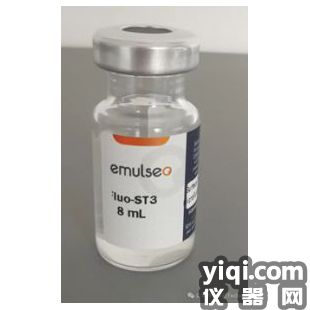
Fluo-ST3 疏水表面处理试剂可以在室温下储存1年而不会损失性能。 经过ST3处理后的芯片,可以在室温下保存1年而不损失性能。
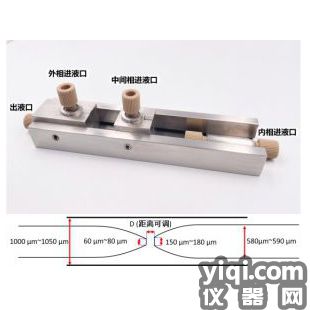
快速、稳定的制备出50-200微米粒径均匀的双乳液滴; 通过使用螺纹的倒锥接头,可快速、直接的连接到外径为1/16英寸(=1.6毫米)的PTFE导管上; 可随时更换锥型玻璃管和反复使用; 降低实验时间
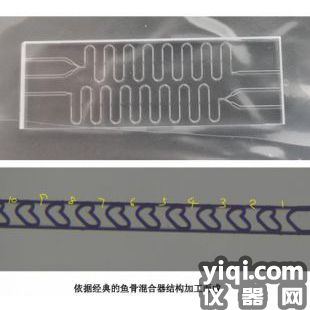
鱼骨位于芯片通道的上方即呈现凸起结构,在经典的鱼骨结构混合器的基础上,将每组鱼骨结构增加到10个鱼骨即每个循环有20个鱼骨结构单元,大幅提高了最终的混合效果。 适用于低流量的溶液混合及质谱连用。
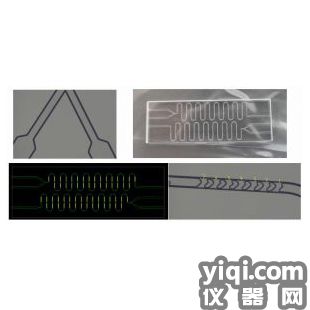
鱼骨位于芯片通道的上方即呈现凸起结构,在经典的鱼骨结构混合器的基 础上,增加了一个鱼骨结构即每组有7个鱼骨结构,提高了最终的混合效果。
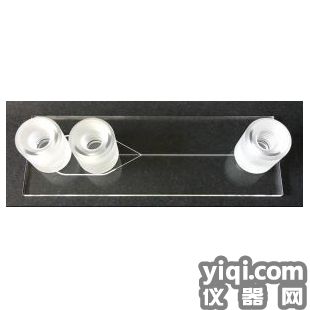
经典人字型玻璃混合器适用于微流控纳米药物制备系统和mRNA-LNP包封仪中的LNP纳米颗粒制备。 粒径尺寸从20纳米到150纳米之间。 玻璃材质,具有高强度的光学透光性,可用显微镜进行观察。
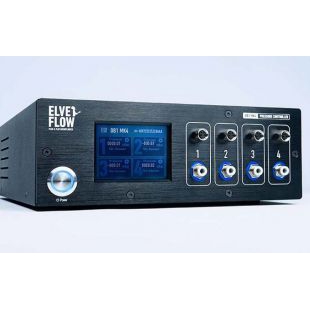
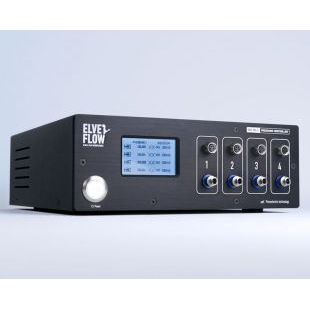
不要让实验设备限制您的微流体实验!强大的OB1 MK4压力控制系统可为各种实验提供精确的流量和压力控制。 无论您是需要压力还是真空,低流速还是高流速,短期实验还是长期实验,OB1 MK4都是您进行微流体研究的优选。 可自定义&升级:1个模块,Z多4个压力通道,5种压力范围 OB1 MK4可以按照任何您想要的方式进行配置和升级,每个模块Z多可以有4个压力和/或真空通道(还可定制更多通道),每个压力和/或真空通道有5种压力量程范围进行任意选择。 配置流量传感器以达到Z快的流量控制
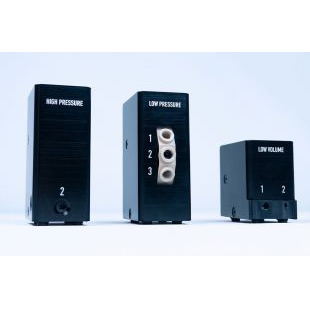
第三代MUX Wire阀控制器和2-way与3-way简易切换阀通过相同的软件界面与Elveflow的微流控阀和仪器实现润滑结合。 WIRE阀控制器配备了内部和外部触发连接器,使其与系统装置中的其他仪器进行同步,例如显微镜、位移台、纳米机械手或分析仪器等。 微流体阀控制器上的LED指示灯可显示每个简易切换阀的类型和状态,以便您以可视化的形式控制系统装置中的每个切换阀。


 营业执照已审核
 分享
分享 收藏
收藏










 沪公网安备 31011502008050号