1. Pasca SP (2018) The rise of three-dimensional human brain cultures. Nature 553(7689):437–445. https://doi.org/10.1038/nature25032
2. Gupta P, Shinde A, Illath K et al (2022) Microfluidic platforms for single neuron analysis. Mater Today Bio 13:100222. https://doi.org/10.1016/j.mtbio.2022.100222
3. Sheng WQ, Li Y, Qin CL et al (2024) Integrated nanoporous electroporation and sensing electrode array for total dynamic time-domain cardiomyocyte membrane resealing assessment. Bio-Des Manuf 7(6):972–982. https://doi.org/10.1007/s42242-024-00308-z
4. Tsai D, Sawyer D, Bradd A et al (2017) A very large-scale microelectrode array for cellular-resolution electrophysiology. Nat Commun 8(1):1802. https://doi.org/10.1038/s41467-017-02009-x
5. Syed NI, Bulloch AG, Lukowiak K (1990) In vitro reconstruction of the respiratory central pattern generator of the mollusk Lymnaea. Science 250(4978):282–285. https://doi.org/10.1126/science.2218532
6. Huang Q, Tang BH, Romero JC et al (2022) Shell microelectrode arrays (MEAs) for brain organoids. Sci Adv 8(33):eabq5031. https://doi.org/10.1126/sciadv.abq5031
7. Pelkonen A, Mzezewa R, Sukki L et al (2020) A modular brain-on-a-chip for modelling epileptic seizures with functionally connected human neuronal networks. Biosens Bioelectron 168:112553. https://doi.org/10.1016/j.bios.2020.112553
8. Buccelli S, Bornat Y, Colombi I et al (2019) A neuromorphic prosthesis to restore communication in neuronal networks. iScience 19:402–414. https://doi.org/10.1016/j.isci.2019.07.046
9. Yamamoto H, Moriya S, Ide K et al (2018) Impact of modular organization on dynamical richness in cortical networks. Sci Adv 4(11):eaau4914. https://doi.org/10.1126/sciadv.aau4914
10. Kajtez J, Buchmann S, Vasudevan S et al (2020) 3D-printed soft lithography for complex compartmentalized microfluidic neural devices. Adv Sci 7(16):2001150. https://doi.org/10.1002/advs.202001150
11. Harberts J, Siegmund M, Schnelle M et al (2021) Robust neuronal differentiation of human iPSC-derived neural progenitor cells cultured on densely-spaced spiky silicon nanowire arrays. Sci Rep 11(1):18819. https://doi.org/10.1038/s41598-021-97820-4
12. Zhao J, Fu Y, Yamazaki Y et al (2020) APOE4 exacerbates synapse loss and neurodegeneration in Alzheimer’s disease patient iPSC-derived cerebral organoids. Nat Commun 11(1):5540. https://doi.org/10.1038/s41467-020-19264-0
13. Zagare A, Barmpa K, Smajic S et al (2022) Midbrain organoids mimic early embryonic neurodevelopment and recapitulate LRRK2-p.Gly2019Ser-associated gene expression. Am J Hum Genet 109(2): 311–327. https://doi.org/10.1016/j.ajhg.2021.12.009
14. Kemmerer ZA, Robinson KP, Schmitz JM et al (2021) UbiB proteins regulate cellular CoQ distribution in Saccharomyces cerevisiae. Nat Commun 12:4769. https://doi.org/10.1038/s41467-021-25084-7
15. Gao K, Gao F, Li J et al (2021) Biomimetic integrated olfactory sensory and olfactory bulb systems in vitro based on a chip. Biosens Bioelectron 171:112739. https://doi.org/10.1016/j.bios.2020.112739
16. Cai HW, Ao Z, Tian CH et al (2023) Brain organoid reservoir computing for artificial intelligence. Nat Electron 6(12):1032–1039. https://doi.org/10.1038/s41928-023-01069-w
17. Kagan BJ, Kitchen AC, Tran NT et al (2022) In vitro neurons learn and exhibit sentience when embodied in a simulated game-world. Neuron 110(23):3952–3969.e8. https://doi.org/10.1016/j.neuron.2022.09.001
18. Abbott J, Ye TY, Krenek K et al (2020) A nanoelectrode array for obtaining intracellular recordings from thousands of connected neurons. Nat Biomed Eng 4(2):232–241. https://doi.org/10.1038/s41551-019-0455-7
19. Luo T, Fan L, Zhu R et al (2019) Microfluidic single-cell manipulation and analysis: methods and applications. Micromachines 10(2):E104. https://doi.org/10.3390/mi10020104
20. Farasat M, Chavoshi SM, Bakhshi A et al (2022) A dielectrophoresis-based microfluidic chip for trapping circulating tumor cells using a porous membrane. J Micromech Microeng 32(1):015008. https://doi.org/10.1088/1361-6439/ac3c89
21. Rampini S, Kilinc D, Li P et al (2015) Micromagnet arrays for on-chip focusing, switching, and separation of superparamagnetic beads and single cells. Lab Chip 15(16):3370–3379. https://doi.org/10.1039/c5lc00581g
22. Lee H, Liu Y, Ham D et al (2007) Integrated cell manipulation system—CMOS/microfluidic hybrid. Lab Chip 7(3):331–337. https://doi.org/10.1039/b700373k
23. Lee H, Liu Y, Westervelt RM et al (2006) IC/Microfluidic hybrid system for magnetic manipulation of biological cells. IEEE J Solid State Circ 41(6):1471–1480. https://doi.org/10.1109/JSSC.2006.874331
24. Yang Y, Pang W, Zhang H et al (2022) Manipulation of single cells via a stereo acoustic streaming tunnel (SteAST). Microsyst Nanoeng 8:88. https://doi.org/10.1038/s41378-022-00424-9
25. Habibey R, Rojo Arias JE, Striebel J et al (2022) Microfluidics for neuronal cell and circuit engineering. Chem Rev 122(18): 14842–14880. https://doi.org/10.1021/acs.chemrev.2c00212
26. Zhang HY, Wang PB, Huang N et al (2023) Single neurons on microelectrode array chip: manipulation and analyses. Front Bioeng Biotechnol 11:1258626. https://doi.org/10.3389/fbioe.2023.1258626
27. Socoliuc V, Peddis D, Petrenko VI et al (2020) Magnetic nanoparticle systems for nanomedicine: a materials science perspective. Magnetochemistry 6(1):2. https://doi.org/10.3390/magnetochemistry6010002
28. Levada K, Pshenichnikov S, Omelyanchik A et al (2020) Progressive lysosomal membrane permeabilization induced by iron oxide nanoparticles drives hepatic cell autophagy and apoptosis. Nano Converg 7(1):17. https://doi.org/10.1186/s40580-020-00228-5
29. Raj DBTG, Khan NA (2016) Designer nanoparticle: nanobiotechnology tool for cell biology. Nano Converg 3(1):22. https://doi.org/10.1186/s40580-016-0082-x
30. Azevedo-Pereira RL, Rangel B, Tovar-Moll F et al (2019) Superparamagnetic iron oxide nanoparticles as a tool to track mouse neural stem cells in vivo. Mol Biol Rep 46(1):191–198. https://doi.org/10.1007/s11033-018-4460-9
31. Hu Y, Li D, Wei H et al (2021) Neurite extension and orientation of spiral ganglion neurons can be directed by superparamagnetic iron oxide nanoparticles in a magnetic field. Int J Nanomed 16:4515–4526. https://doi.org/10.2147/ijn.s313673
32. Rampini S, Li P, Lee GU (2016) Micromagnet arrays enable precise manipulation of individual biological analyte-superparamagnetic bead complexes for separation and sensing. Lab Chip 16(19):3645–3663. https://doi.org/10.1039/c6lc00707d
33. Jolivet JP, Chanáac C, Tronc E (2004) Iron oxide chemistry. From molecular clusters to extended solid networks. Chem Commun (5):481–487. https://doi.org/10.1039/b304532n
34. Hiranuma M, Okuda Y, Fujii Y et al (2024) Characterization of human iPSC-derived sensory neurons and their functional assessment using multi electrode array. Sci Rep 14(1):6011. https://doi.org/10.1038/s41598-024-55602-8
35. Yoshida S, Kato-Negishi M, Takeuchi S (2018) Assembly and connection of micropatterned single neurons for neuronal network formation. Micromachines 9(5):235. https://doi.org/10.3390/mi9050235
36. Bakkum DJ, Frey U, Radivojevic M et al (2013) Tracking axonal action potential propagation on a high-density microelectrode array across hundreds of sites. Nat Commun 4:2181. https://doi.org/10.1038/ncomms3181
37. Lee S, Kim S, Kim S et al (2018) A capsule-type microrobot with pick-and-drop motion for targeted drug and cell delivery. Adv Healthc Mater 7(9):e1700985. https://doi.org/10.1002/adhm.201700985
38. Kim E, Jeon S, An HK et al (2020) A magnetically actuated microrobot for targeted neural cell delivery and selective connection of neural networks. Sci Adv 6(39):eabb5696. https://doi.org/10.1126/sciadv.abb5696
 相关产品推荐(★较多用户关注☆)
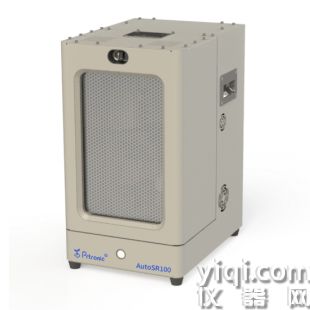 合成反应器-幂方科技 Auto SR100 自动合成反应器
 微电子打印机-幂方科技 MF-MP1100 微电子打印机
 微电子打印机-幂方科技 MF-MP2200 多功能微电子打印机
 微电子打印机-幂方科技 MF-MP3300多功能微电子打印机
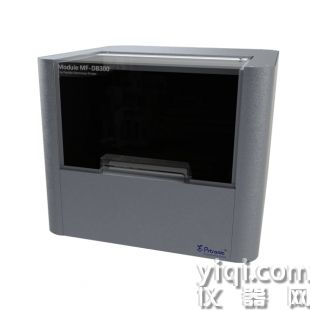 微电子打印机-幂方科技 MF-DB300多功能柔性电子打印机
 电子电路打印机-幂方科技 MF-EM400 电子电路印刷设备
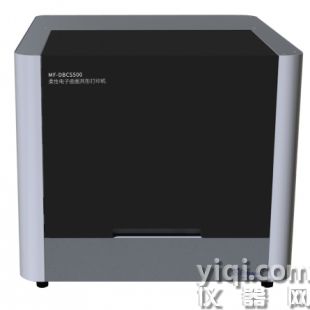 曲面共形打印机-幂方科技 MF-DBCS500 多功能柔性电子曲面共形打印机
 柔性电子器件制备-幂方科技 MF-AP300 自动后处理平台
 你可能还想看







 热点文章
热点文章 氙灯老化试验箱的暴露周期湿度范围是多少
 近期话题
近期话题 相关产品
相关产品





 沪公网安备 31011502008050号
参与评论
登录后参与评论