仪器网(yiqi.com)欢迎您!

| 注册2 登录
网站首页-资讯-专题- 微头条-话题-产品- 品牌库-搜索-供应商- 展会-招标-采购- 社区-知识-技术-资料库-方案-产品库- 视频

产品中心

仪器网>产品中心> 光学仪器>电子光学仪器>扫描探针显微镜/原子力显微镜/扫描隧道显微镜/磁力显微镜/静电力显微镜>MCL MadPLL®原子力显微镜控制器

MCL MadPLL®原子力显微镜控制器

面议 (具体成交价以合同协议为准)
MCL Think Nano MadPLL® 美洲 美国 2026-01-24 06:41:15
售全国 入驻:11年 等级:认证 营业执照未审核
同款产品:多光子成像(14件)
扫    码    分   享

立即扫码咨询

400-822-6768

已通过仪器网认证,请放心拨打!

联系我们时请说明在仪器网(www.yiqi.com)上看到的,谢谢!

为你推荐

产品详情:


Instant AFM and nanoprobe instrumentation - just add science! View our AFM Video Tutorial.


MadPLL phase lock loop controller for building tuning fork AFM with nanopositioning systems
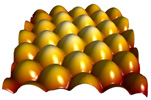
MadPLL Atomic Force Microscope Image of a Test PatternMadPLL Atomic Force Microscope Image of a Test PatternMadPLL Atomic Force Microscope Image of an Integrated CircuitMadPLL Atomic Force Microscope Image of a Test PatternMadPLL Atomic Force Microscope Image of a Fly Eye

Please click on a heading to view a topic. Click the heading a second time to collapse the topic.

  Introduction


MadPLL® is a powerful instrument package that allows the user to create an inexpensive, high resolution resonant scanning probe microscope using Mad City Labs nanopositioning systems. In short, MadPLL® can be used to create an “instant” closed loop AFM or NSOM at a fraction of the cost of commercial systems. MadPLL® is suitable for nanoscale characterization and nanoscale fabrication applications such as optical antennas, nano-optics, semiconductors, data storage, and more.

MadPLL® has been specifically designed for resonant probes such as tuning forks and Akiyama probes. In addition MadPLL® is fully compatible with Mad City Labs’ high resolution nanopositioning systems which makes it easy for users to build a scanning probe microscope with a flexibility that cannot be achieved with other commercial systems. The seamless integration of hardware combined with the built-in automated control of MadPLL® means that you can concentrate on getting results.

MadPLL® is ideal for research and teaching laboratories offering high performance, versatility, simplicity and excellent value.

FeaturesLow costSoftware, PLL controller, sensor amplifier, and probe boards includedEasy and flexible configurationFully self contained - no external signals requiredAutomated software controlAuto PCC controlAuto Q Calculation, resonant frequency detectionIntegrated Z axis PI control loopFully compatible with Mad City Labs positioning products


  What is MadPLL®?


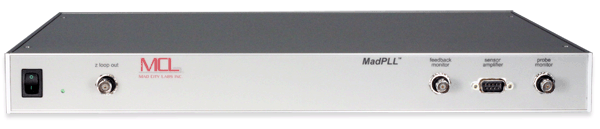
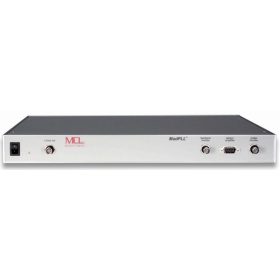
MadPLL® is an integrated solution that includes the digital phase lock loop (PLL) controller, software, sensor amplifier board and resonant probe mounting board. Simply add your Akiyama probe or tuning fork to the probe board to create a powerful force sensor for scanning probe measurements.

The MadPLL® package includes the MadPLL® digital PLL controller, sensor board, probe board, and MadPLL® software. Ease of integration with resonant probes and Mad City Labs' low noise nanopositioning systems give users the ability to create high performance, low cost NSOM and AFM instruments.


The PLL controller contains a digitally controlled proportional integral (PI) loop designed to work seamlessly with Mad City Labs’ nanopositioning systems. The addition of closed loop nanopositioners adds to the high performance of MadPLL®. Additional options are available for multi-axis closed loop nanopositioning control. 

The PLL controller has three operational modes: self oscillation, PLL driven, and (lock-in) DDS driven. The probe can be controlled in constant excitation or constant signal mode. Measured outputs from the controller include changes in frequency, amplitude or phase shift.

The digital MadPLL® controller has three operational modes: self oscillation, PLL driven, and DDS driven. The probe can be controlled in constant excitation amplitude or constant signal amplitude. Changes in frequency, amplitude, or phase are measured for Z control.


The MadPLL® package includes a digital phase lock loop (PLL) controller, software, sensor amplifier board, and resonant probe mounting board. MadPLL® includes five (5) each of the vertical, horizontal, Akiyama, and blank probe boards. In addition, each unit is shipped with five (5) tuning forks. Additional probe boards and tuning forks can be purchased separately.

The sensor amplifier and probe board assemblies are compact and can be fitted to existing instrumentation. The probe board simply plugs into the sensor amplifier board. The sensor amplifier board can be mounted to a precision positioner such as a closed loop nanopositioning system. The probe board has been designed for use with tuning forks and Akiyama probes. These probes are easy to mount and alignment free.


MadPLL® includes a sensor amplifier board and probe boards. The probe boards are designed for use with tuning forks, Akiyama probesand Accutune probes.


  MadPLL® Software


MadPLL® software simplifies the control of your scanning probe microscope. All of the functions of MadPLL® are fully automated but accessible via individual software control. Among the software features are automated setup, configuration control, auto-Q calculation and automatic parasitic capacitance compensation (PCC) control. These included features are designed to simplify setup and accelerate the data acquisition process. MadPLL® software integrates seamlessly with Mad City Labs' AFMView™ software. AFMView™ software is part of our complete SPM development system.


  Application - AFM Video Tutorial


Instant AFM - just add science!


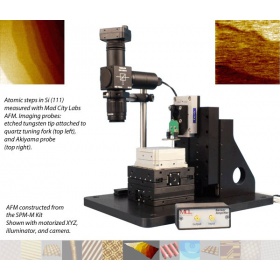
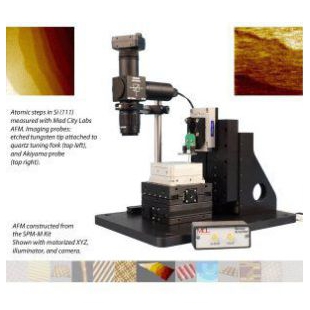
MadPLL® can be used to create a customized, high resolution Akiyama probe or tuning fork atomic force microscope (AFM) at a fraction of the cost of commercial systems. MadPLL® has been designed to directly interface with Mad City Labs’ low noise single and multi-axis nanopositioning systems, making it possible to create a fully closed loop AFM. The AFM described is suitable for both research and teaching environments and can be further customized for vacuum operation. MadPLL® is suitable for nanoscale characterization and nanoscale fabrication applications such as optical antennas, nano-optics, semiconductors, data storage, and more.

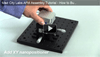
Mad City Labs AFM Assembly Tutorial - How to Build an "Instant" Atomic Force Microscope 


Video Bill of MaterialsSPM-M KitMadPLL® Instrument Packagedigital phase lock loop (PLL) controllerAkiyama probe mounting boardsensor amplifier boardNano-SPM200 nanopositioning stage (XY)Nano-OP30 nanopositioning stage (Z)3 axis closed loop Nano-Drive® controllerZ axis open loop/close loop switch (OCL option)Adapter plate between preamplifier and Nano-OP30Adapter plate to Thorlabs MT1 micropositionerXY and Z coarse motion: standard stages available from optical component suppliersProbe: Akiyama probeHardware: standard optical mounting fixturesPC: Windows XP/Vista/7 (32 bit or 64 bit compatible)This configuration is a highly flexible, low cost, multi-axis, closed loop Akiyama or tuning fork AFM called the SPM-M Kit. All Mad City Labs nanopositioning systems have low noise PicoQ® sensors and closed loop feedback control. Using MadPLL® the user can create a high performance scanning probe instrument at low cost.Additional options available from Mad City Labs Quartz Crystal Tuning ForksAFMView software (included with SPM-M Kit)Other configurations of 3 axis closed loop nanopositioners*   (e.g. Nano-HS3 Series, Nano-OP30 (Z), Nano-H Series (XY))Vacuum compatible nanopositionersLED IlluminatorTungsten tip etching kit* All Mad City Labs nanopositioning systems include the Nano-Drive® controller which is fully LabVIEW/C++/MATLAB compatible.AFM configurations typically achieve Z resolutions of 0.5nm (rms) and a scanning frequency of 1Hz. Higher resolutions and scan speeds can be achieved using different nanopositioner combinations. All Mad City Labs nanopositioning systems ahave low noise PicoQ® sensors and closed loop feedback control.Recommended additional items Vibration isolation tableCoarse Z-axis approach (manual or automated)


  Image Gallery


Seeing is Believing!


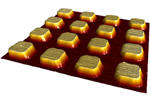
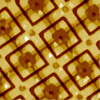
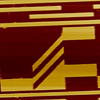
The images below were acquired using MadPLL® with Mad City Labs closed loop nanopositioning systems. 

Calibration grid(100nm tall lines, 2μm apart)10μm x 10μmUnidirectional scanSelf oscillation mode, constant probe signalZ force feedback: frequencyData taken using MadPLL® with Nano-HS3 3-axis nanopositioning system.Calibration grid(100nm tall pegs, spaced 2μm apart)10μm x 10μmUnidirectional scanSelf oscillation mode, constant probe signalZ force feedback: frequencyData taken using MadPLL® with Nano-HS3 3-axis nanopositioning system.Fly eye100μm x 100μmBidirectional scanPLL mode, constant probe signalZ force feedback: frequencyData taken using MadPLL® with Nano-OP30 nanopositioning system (Z-axis), Nano-OP100 nanopositioning system (XY axes)Human hair100μm x 100μmBidirectional scanSelf oscillation mode, constant probe signalZ force feedback: frequencyData taken using MadPLL® with Nano-OP30 nanopositioning system (Z-axis), Nano-OP100 nanopositioning system (XY axes)PMMA pattern, uncured10 μm x 10 μmBidirectional scanSelf oscillation mode, constant probe signalZ force feedback: frequencyData taken using MadPLL® with Nano-OP30 nanopositioning system (Z-axis), Nano-OP100 nanopositioning system (XY axes)Integrated circuit100 μm x 100 μmBidirectional scanSelf oscillation mode, constant probe signalZ force feedback: frequencyData taken using MadPLL® with Nano-OP30 nanopositioning system (Z-axis), Nano-OP100 nanopositioning system (XY axes)Calibration grid40 μm x 40 μmUnidirectional scanSelf oscillation mode, constant probe signalZ force feedback: frequencyData taken using MadPLL® with Nano-OP30 nanopositioning system (Z-axis), Nano-OP100 nanopositioning system (XY axes)Calibration grid(100nm tall, 10μm pitch)70 μm x 70 μmUnidirectional scanPLL mode, constant probe signalZ force feedback: frequencyData taken using MadPLL® with Nano-OP30 nanopositioning system (Z-axis), Nano-OP100 nanopositioning system (XY axes)Etched structures80 μm x 80 μmBidirectional scanSelf oscillation mode, constant probe signalZ force feedback: frequencyData taken using MadPLL® with Nano-OP30 nanopositioning system (Z-axis), Nano-OP100 nanopositioning system (XY axes)


  Technical Specifications


Lock-In AmplifierPhase Shifter0° to 360°Demodulation Bandwidth3 kHz


Phase Lock LoopAuto Range SelectionYESMeasurement Range± 500 HzMeasurement Resolution50 mHz


PreamplifierInput Gain (Attenuator)0x to 1x (16 bit internal DAC)Parasitic Capacitance Compensation (PCC)YESAutomatic PCCYES


Probe Oscillation LoopOperating Modesself oscillationPLL drivenlock-in/DDS drivenAmplitude Control Modesconstant excitationconstant signalAmplitude Setpoint16 bit internal DACAmplitude ControlYES, adjustable PI loop filterInput Voltage Range±10 V(peak)Input Voltage Gain2x to 40xFrequency Range10 kHz to 100 kHzOutput Voltage Range±10 V(peak)


PI Loop Filter (Z-Axis)Integration Time Constantdigitally controlledDigitally Set ParametersYESError Signal Inversion CapabilityYESSensor Signalsfrequencyphaseexcitation amplitudesignal amplitudeCommand Signal16 bit internal DACAutomatic Loop Filter SetupYes, after initializationLoop Output0 to 14V


GeneralSpectrum Analysisamplitude, phaseFeedback Monitor BNCfrequencyphaseexcitation amplitudesignal amplitudeProbe Signal Monitor (BNC)sinewave amplitude probe (diagnostic)Power Supply90 to 260 VAC (50/60 Hz)Controller Dimensions16.75" x 14" x 1.75" (1U)(42.55cm x 35.56cm x 4.45cm)PC ConnectionUSBOperating System32 bit: Windows 2000/XP Pro/Vista/764 bit: Windows XP Pro/Vista/7LabVIEW Software OS32 bit: Windows 2000/XP Pro/Vista/764bit: Windows XP Pro/Vista/7


Additional Information

MadPLL® Brochure
MadPLL brochure

Laser Focus World Article

article on low-cost AFM built with MadPLL and nanopositioning systems
NANOPOSITIONING: Piezo-electric nano-positioners forge low-cost atomic force microscope
AFM Video Tutorial
Build your own AFM tutorial video

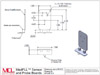
MadPLL® Sensor Probe Board Drawing

AFM sensor probe board drawing


Related Products

  • SPM-M Kit

  • Tuning Forks

  • Nano-HS Series

  • Nano-OP Series

  • Nano-H Series

  • Nano-SPMZ

  • Nano-SPM200

  • Nanopositioning Accessories

  • Nano-Drive®


您可能感兴趣的产品

北京欧兰科技发展有限公司为你提供MCL MadPLL®原子力显微镜控制器信息大全,包括MCL MadPLL®原子力显微镜控制器价格、型号、参数、图片等信息;如想了解更多产品相关详情,烦请致电详谈或在线留言!
  • 相关品类
  • 同厂商产品
  • 同类产品
  • 相关厂商

您可能还在找

新品推荐

高真空显微镜NX-Hivac 高真空原子力显微镜

Park NX-Hivac通过为失效分析工程师提供高真空环境来提高测量敏感度以及原子力显微镜测量的可重复性。与一般环境或干燥N2条件相比,高真空测量具有准确度好、可重复性好及针尖和样本损伤低等优点。

原子力显微镜 NX-Wafer 全自动晶圆检测原子力显微镜

高精度探针针尖变量的亚埃米级表面粗糙度测量,晶圆的表面粗糙度对于确定半导体器件的性能是至关重要的,对于先进的元件制造商,芯片制造商和晶圆供应商都要求对晶圆商超平坦表面进行更精确的粗糙度控制。
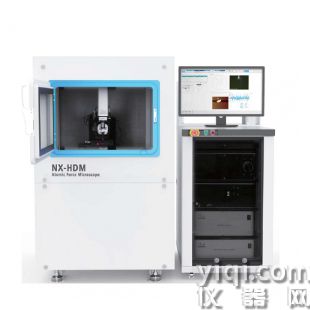
全自动显微镜 NX-HDM 全自动缺陷检测原子力显微镜

对于工程师来说,识别介质/平面基底的纳米级缺陷的任务是一个非常耗时的过程,Park NX-HDM原子力显微镜系统可以自动缺陷识别,通过与各种光学仪器的联用可以提高缺陷检测效率。
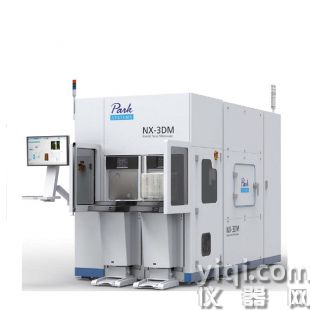
可旋转显微镜 NX-3DM 可旋转全自动原子力显微镜

Park Systems推出NX-3DM全自动原子力显微镜系统,专为垂悬轮廓、高分辨率侧壁成像和临界角的测量而设计。

电学原子力 Nano observer 电学原子力显微镜

CSI是一家法国科学设备制造商,拥有专业的AFM设计概念,以及为现有的AFM提供设计选项。它避免了激光对准需要预先定位针尖的系统,针尖/样品的顶部和侧视图,结合垂直的马达控制系统,使预先趋近更加容易。

电镜原位原子力 EM-AFM 电镜原位原子力显微镜

EM-AFM可在SEM中同时提供原子力显微镜成像和纳米机械测量。它综合了这两种技术的优点,可高速获得高分辨率的三维图像,并且在微纳米和亚纳米尺度上实时观察纳米级力的相互作用,与常规SEM/FIB兼容,
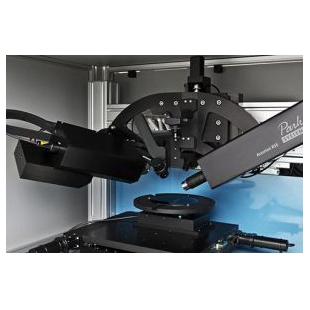
Accurion RSE 快速晶圆检测

Accurion Nano 系列 主动隔振台

推荐品牌

美国MCL Think Nano 美国Forge Nano 韩国Nano System 德国Nano analytik 微纳均质 深圳纳威科技 美国那诺-马斯特 美国think-lab 美国Nano-Master 多伦多纳米操作机

在线留言

上传文档或图片,大小不超过10M
换一张?
取消