仪器网(yiqi.com)欢迎您!

| 注册2 登录
网站首页-资讯-专题- 微头条-话题-产品- 品牌库-搜索-供应商- 展会-招标-采购- 社区-知识-技术-资料库-方案-产品库- 视频

产品中心

仪器网>产品中心> 光学仪器>电子光学仪器>扫描探针显微镜/原子力显微镜/扫描隧道显微镜/磁力显微镜/静电力显微镜>MCL原子力显微镜SPM-M套件

MCL原子力显微镜SPM-M套件

面议 (具体成交价以合同协议为准)
MCL Think Nano SPM-M Kit 美洲 美国 2026-01-24 14:52:21
售全国 入驻:11年 等级:认证 营业执照未审核
同款产品:多光子成像(14件)
扫    码    分   享

立即扫码咨询

400-822-6768

已通过仪器网认证,请放心拨打!

联系我们时请说明在仪器网(www.yiqi.com)上看到的,谢谢!

为你推荐

产品详情:


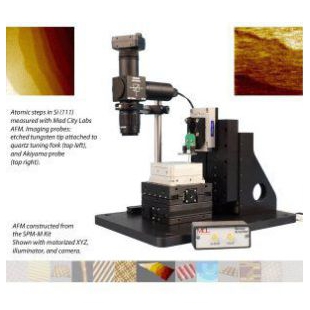
SPM-M Kit - build an Akiyama probe or tuning fork AFM with Mad City Labs nanopositioners

  Introduction


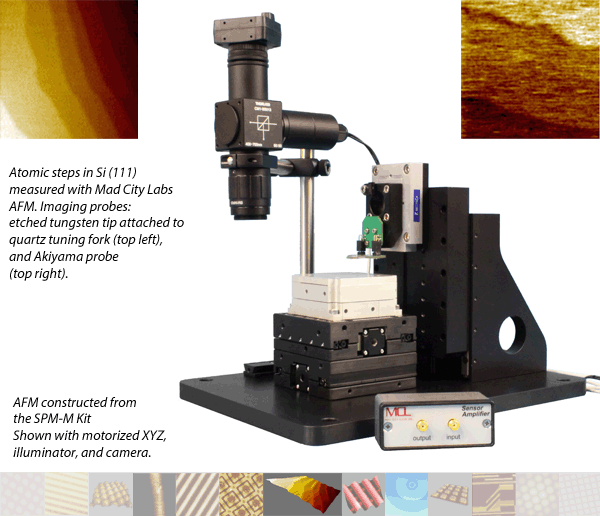
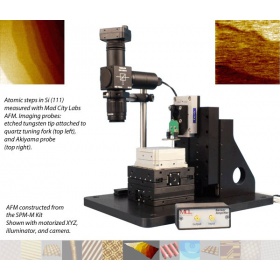
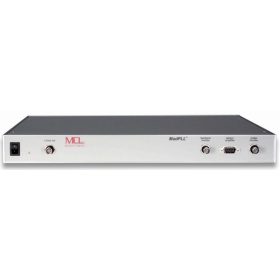
The SPM-M Kit combines the MadPLL® instrument package with Mad City Labs high resolution nanpositioning systems to form a high performance, closed loop, scanning Akiyama probe or tuning fork AFM. The seamless integration of hardware combined with the built-in automated control of MadPLL® means that you can concentrate on getting results, not tweaking parameters. Applications for the SPM-M Kit include nanoscale characterization and nanoscale fabrication applications such as optical antennas, nano-optics, semiconductors, data storage, and more. The SPM-M Kit is ideal for research and teaching laboratories offering high performance, versatility, simplicity and excellent value.At left: Schematic of a typical AFM instrument based on the SPM-M Kit.The SPM-M Kit includes: MadPLL® Instrument Packagedigital phase lock loop (PLL) controllerprobe mounting boardsfive quartz tuning forksNano-SPM200 nanopositioning stage (XY)Nano-OP30 nanopositioning stage (Z)3 axis closed loop Nano-Drive® controllerZ axis open loop/close loop switch (OCL option)AFMView™ SoftwareAFMView™ TutorialAdapter plate between probe mount board and Nano-OP30Application note: "AFM Kit with manual positioning"Application note: "Tungsten tip etching station"MadPLL® is a powerful instrument package that allows the user to create an inexpensive, high resolution resonant scanning probe microscope using Mad City Labs nanopositioning systems. The MadPLL® package includes a digital phase lock loop (PLL) controller, software, sensor amplifier board, and resonant probe mounting board. MadPLL® includes five (5) each of the vertical, horizontal, Akiyama, and blank probe boards. In addition, each unit is shipped with five (5) tuning forks. Additional probe boards and tuning forks can be purchased separately.Available options:Double walled isolation enclosureCoaxial illuminatorMotorized or manual Z-axis approachMotorized or manual XY-axisCameraSPM baseplateSPM Etch KitNot included:These items are described in the application note and are listed in the Bill of Materials (BOM)L-BracketFasteners or clampsRecommended additional items:Vibration isolation table


  Absolute Metrology


The SPM-M Kit incorporates the Nano-SPM200and Nano-OP30with a three axis Nano-Drive®controller for closed loop nanopositioning in X, Y, and Z. These systems incoporate Mad City Lab's proprietary PicoQ®sensor technologyfor closed loop feedback control, offering significant advantages in terms of image quality, accuracy and repeatability over open loop scanners. The sensor signal from all three axes can be read during AFM scans via the analog output signal or USB, thus minimizing the effects of hysteresis, curvilinear motion, and creep that result if data are analyzed using assumed commanded positions. Using position information from closed loop sensors also eliminates the need to scan a calibration grid in XYZ before scanning every sample. Scanning with closed loop nanopositioners saves time and improves image quality. Closed loop feedback also allows the nanopositioners to move and return to commanded positions with much more reliability than open loop systems, allowing users to return to previously scanned features for further analysis. 

For further information about the PicoQ® sensors used in Mad City Labs nanopositioning systems, see the PicoQ® sensor technology pageand our Technical Information pages.


  AFM Video Tutorial


Instant AFM - just add science!


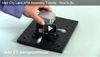
The video at the page linked below illustrates how to use the SPM-M kit along with an Akiyama Probe, manual coarse positioners, and hardware to create a low cost, easy assembly, high resolution AFM.

Mad City Labs AFM Assembly Tutorial - How to Build an "Instant" Atomic Force Microscope


  Image Gallery


Seeing is Believing!


The images below were acquired using similar configurations to the SPM-M Kit. 

Si (111) Atomic Steps(312pm monatomic layer thickness)2μm x 2μmData taken using MadPLL® with Nano-HS3 3-axis nanopositioning system and etched tungsten tip on a quartz tuning fork. Si (111) Atomic Steps(312pm monatomic layer thickness)1.76μm x 2.02μmData taken using MadPLL® with Nano-HS3 3-axis nanopositioning system and Akiyama probe. Calibration grid(100nm tall lines, 2μm apart)10μm x 10μmUnidirectional scanSelf oscillation mode, constant probe signalZ force feedback: frequencyData taken using MadPLL® with Nano-HS3 3-axis nanopositioning system and Akiyama probe. Calibration grid(100nm tall pegs, spaced 2μm apart)10μm x 10μmUnidirectional scanSelf oscillation mode, constant probe signalZ force feedback: frequencyData taken using MadPLL® with Nano-HS3 3-axis nanopositioning system and Akiyama probe.Fly eye100μm x 100μmBidirectional scanPLL mode, constant probe signalZ force feedback: frequencyData taken using MadPLL® with Nano-OP30 nanopositioning system (Z-axis), Nano-OP100 nanopositioning system (XY axes) and Akiyama probe.Human hair100μm x 100μmBidirectional scanSelf oscillation mode, constant probe signalZ force feedback: frequencyData taken using MadPLL® with Nano-OP30 nanopositioning system (Z-axis), Nano-OP100 nanopositioning system (XY axes) and Akiyama probe.PMMA pattern, uncured10 μm x 10 μmBidirectional scanSelf oscillation mode, constant probe signalZ force feedback: frequencyData taken using MadPLL® with Nano-OP30 nanopositioning system (Z-axis), Nano-OP100 nanopositioning system (XY axes) and Akiyama probe.Integrated circuit100 μm x 100 μmBidirectional scanSelf oscillation mode, constant probe signalZ force feedback: frequencyData taken using MadPLL® with Nano-OP30 nanopositioning system (Z-axis), Nano-OP100 nanopositioning system (XY axes) and Akiyama probe.Calibration grid40 μm x 40 μmUnidirectional scanSelf oscillation mode, constant probe signalZ force feedback: frequencyData taken using MadPLL® with Nano-OP30 nanopositioning system (Z-axis), Nano-OP100 nanopositioning system (XY axes) and Akiyama probe.Calibration grid(100nm tall, 10μm pitch)70 μm x 70 μmUnidirectional scanPLL mode, constant probe signalZ force feedback: frequencyData taken using MadPLL® with Nano-OP30 nanopositioning system (Z-axis), Nano-OP100 nanopositioning system (XY axes) and Akiyama probe.Etched structures80 μm x 80 μmBidirectional scanSelf oscillation mode, constant probe signalZ force feedback: frequencyData taken using MadPLL® with Nano-OP30 nanopositioning system (Z-axis), Nano-OP100 nanopositioning system (XY axes) and Akiyama probe.


  Tungsten Tip Etching with the SPM Etch Kit


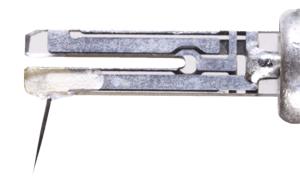
An etched tungsten tip glued to a quartz tuning fork for Atomic Force Microscopy.
An etched tungsten tip glued to a quartz tuning fork.


One way to produce sharp probe tips suitable for building an AFM is to electrochemically etch tungsten wire. This method can produce a tip radius of better than 50nm. Post etching techniques can even sharpen the tip down to a <1nm tip radius. These sharp tungsten tips can be mounted to quartz tuning forks for AFM or for other types of scanning probe microscopy like scanning tunneling microscopy (STM). 

There are a variety of methods to choose from to etch the tungsten wire. The single lamella technique is easy to setup and can consistently produce sharp tips. Among the requirements for this process are a metallic ring, a beaker, Potassium Hydroxide (KOH), tungsten wire, and a voltage source. A drop of KOH is added to the metal ring suspended above the beaker, forming a thin film or lamella of KOH inside the metallic ring. The negative terminal of the voltage source is then connected to the suspended metallic ring. This will form the negative electrode. The beaker below the ring is then filled with KOH and the positive terminal of the voltage source is wired intod the KOH solution. This forms the positive electrode. The tungsten wire is then dipped through the center of the lamella and into the KOH in the beaker. The voltage source dis then turned on which begins the etching process. The tungsten is electrochemically etched at the lamella. The etching process automatically stops when the tungsten wire is etched so thin that the portion of wire below the lamella falls off and drops into the beaker. The remaining tungsten wire above the lamella is removed and any remaining KOH or contaminants are rinsed off with distilled water. This leaves a very sharp tip suitable for use in AFM or other types of SPM.

Mad City Labs provides an SPM Etch Kitalong with an application note on etching Tungsten tips to make this easy.


Additional Information

MadPLL® Brochure

Laser Focus World Article


NANOPOSITIONING: Piezo­electric nano­positioners forge low-cost atomic force microscope
AFM Video Tutorial


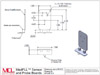
MadPLL® Sensor Probe Board Drawing


Application Notes:

SPM-004 "Building an AFM with motorized XYZ and camera"
SPM-005 "Building an AFM with manual XY, motorized Z and camera"
SPM-006 "Creating tungsten tips using the Mad City Labs SPM Etch Kit"
SPM-007 "Using shattered silicon as resonant probe tips"

Available upon customer request


Related Products

  • SPM Accessories

  • MadPLL®

  • Tuning Forks

  • Nano-OP Series

  • Nano-SPM200

  • Nano-HS Series

  • Nanopositioning Accessories

  • Nano-Drive®


您可能感兴趣的产品

北京欧兰科技发展有限公司为你提供MCL原子力显微镜SPM-M套件信息大全,包括MCL原子力显微镜SPM-M套件价格、型号、参数、图片等信息;如想了解更多产品相关详情,烦请致电详谈或在线留言!
  • 相关品类
  • 同厂商产品
  • 同类产品
  • 相关厂商

您可能还在找

新品推荐

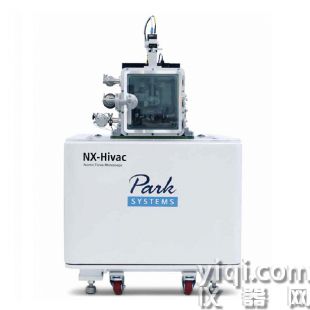
高真空显微镜NX-Hivac 高真空原子力显微镜

Park NX-Hivac通过为失效分析工程师提供高真空环境来提高测量敏感度以及原子力显微镜测量的可重复性。与一般环境或干燥N2条件相比,高真空测量具有准确度好、可重复性好及针尖和样本损伤低等优点。

原子力显微镜 NX-Wafer 全自动晶圆检测原子力显微镜

高精度探针针尖变量的亚埃米级表面粗糙度测量,晶圆的表面粗糙度对于确定半导体器件的性能是至关重要的,对于先进的元件制造商,芯片制造商和晶圆供应商都要求对晶圆商超平坦表面进行更精确的粗糙度控制。
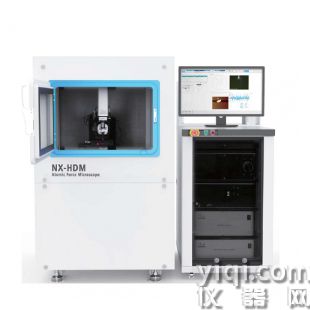
全自动显微镜 NX-HDM 全自动缺陷检测原子力显微镜

对于工程师来说,识别介质/平面基底的纳米级缺陷的任务是一个非常耗时的过程,Park NX-HDM原子力显微镜系统可以自动缺陷识别,通过与各种光学仪器的联用可以提高缺陷检测效率。
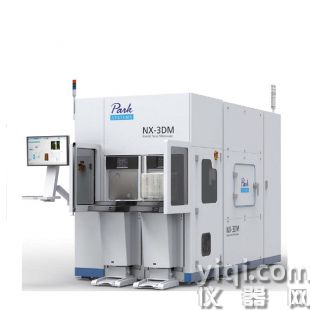
可旋转显微镜 NX-3DM 可旋转全自动原子力显微镜

Park Systems推出NX-3DM全自动原子力显微镜系统,专为垂悬轮廓、高分辨率侧壁成像和临界角的测量而设计。

电学原子力 Nano observer 电学原子力显微镜

CSI是一家法国科学设备制造商,拥有专业的AFM设计概念,以及为现有的AFM提供设计选项。它避免了激光对准需要预先定位针尖的系统,针尖/样品的顶部和侧视图,结合垂直的马达控制系统,使预先趋近更加容易。
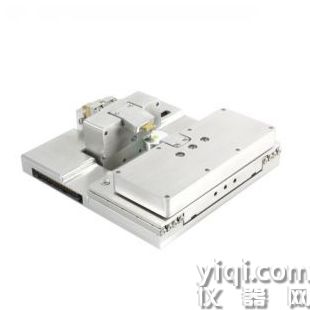
电镜原位原子力 EM-AFM 电镜原位原子力显微镜

EM-AFM可在SEM中同时提供原子力显微镜成像和纳米机械测量。它综合了这两种技术的优点,可高速获得高分辨率的三维图像,并且在微纳米和亚纳米尺度上实时观察纳米级力的相互作用,与常规SEM/FIB兼容,
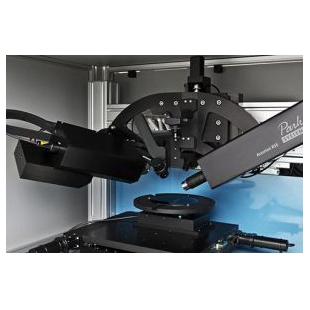
Accurion RSE 快速晶圆检测

Accurion Nano 系列 主动隔振台

推荐品牌

美国MCL Think Nano 美国Forge Nano 韩国Nano System 德国Nano analytik 微纳均质 深圳纳威科技 美国那诺-马斯特 美国think-lab 美国Nano-Master 多伦多纳米操作机

在线留言

上传文档或图片,大小不超过10M
换一张?
取消